Diagnostic Station
- 1 Oct
- 6 min read
Does high creatinine always mean there is a kidney problem?
Creatinine, urea, estimated glomerular filtration rate. If you have ever opened your blood test results and felt as though you needed a translator, let’s start there.
A renal profile, also known as a kidney function blood test, is a group of tests that helps assess how well your kidneys are working. It can provide information about how your body removes waste and maintains the balance of substances it needs. Exactly what is included depends on the laboratory and the reason for testing.
Let’s give those numbers names, and considerably more context.
What your kidneys do besides produce urine
Your kidneys filter your blood, remove waste and regulate how much water and certain minerals your body retains. Inside each kidney are tiny structures called nephrons, which separate what needs to leave the body from what can be returned to the bloodstream.
They also help regulate blood pressure, support red blood cell production and keep your bones healthy. Quite a workload for two organs that rarely get a mention in everyday conversation. NIDDK: how your kidneys work.
What does a renal profile test?
The name of the panel is only the starting point. To know exactly what will be tested, you need to check the list of measurements included.
Creatinine and estimated glomerular filtration rate
Creatinine is a waste product associated with normal muscle activity. Your kidneys remove it from the blood, so its concentration can help assess kidney function. However, creatinine levels can also be influenced by muscle mass, diet and exercise.
This is why creatinine is usually reported alongside the estimated glomerular filtration rate, shown on your results as eGFR or sometimes GFR. This calculation estimates how effectively your kidneys are filtering your blood. MedlinePlus: creatinine test.
The word “estimated” matters because the calculation has limitations. In some situations, measuring another substance called cystatin C can produce a more accurate estimate. Current NIDDK recommendations favour equations that do not include a race-based coefficient. NIDDK: estimating glomerular filtration rate.
Urea and electrolytes
Urea is produced when the body breaks down protein and is removed through the kidneys. Some reports show BUN, or blood urea nitrogen, instead. The two measurements are related, but their numerical values are not interchangeable.
Electrolytes, including sodium, potassium, chloride and bicarbonate, help maintain the body’s fluid and acid-base balance. They are also essential for normal nerve and muscle function.
Depending on the renal profile, the test may include other measurements such as calcium or glucose. A result outside the reference range does not point exclusively to the kidneys, as these tests can provide information about several different processes in the body. MedlinePlus: basic metabolic panel.
When are kidney function tests requested?
Kidney function tests may be used to investigate a possible kidney problem or to monitor a condition that has already been diagnosed.
Diabetes, high blood pressure, cardiovascular disease and a family history of kidney failure are all reasons to discuss kidney checks with a healthcare professional. How often you need testing will depend on your individual circumstances.
Early kidney disease may not cause noticeable symptoms. Feeling perfectly well is welcome, of course, but it cannot tell you how effectively your kidneys are working. NIDDK: kidney disease tests and diagnosis.
You should also speak to a healthcare professional if you notice blood in your urine, swelling or persistent changes in urination. These symptoms can have several causes and need proper assessment. MedlinePlus: why a creatinine test may be requested.
Why you may also be asked for a urine sample
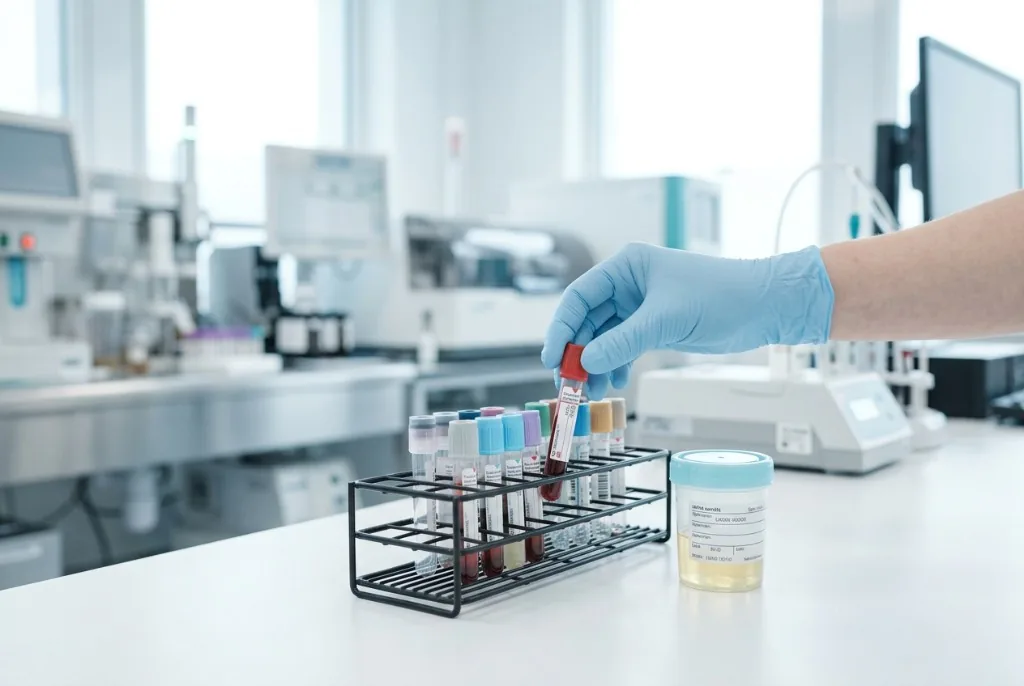
It may seem slightly odd that a kidney check begins with blood being taken from your arm. Blood tests measure substances that the kidneys filter, while a urine sample answers a different set of questions.
One important urine test is the urine albumin-to-creatinine ratio, also called ACR or UACR. It can detect increased amounts of albumin, a protein that may appear in the urine when the kidneys are damaged.
This is why a kidney assessment may combine eGFR with a urine albumin test. Requesting both is not repetition: each test reveals something different. NIDDK: blood and urine tests for kidney disease.
How to prepare for a kidney function blood test
The blood sample is usually taken from a vein in your arm. Any preparation will depend on the particular tests included in your renal profile.
Check whether you need to fast. Some tests require fasting for 8 to 12 hours, but do not fast “just in case”. If fasting is required, you can usually drink plain water. Coffee, even without milk or sugar, will have to wait.
Tell the laboratory or healthcare professional about any medication and supplements you take, and ask whether there are any special instructions to follow. Do not stop taking prescribed medication unless a professional has told you to do so. If you accidentally eat during the fasting period, tell the laboratory before your sample is taken. MedlinePlus: fasting before a blood test.
How to understand your renal profile results
That little asterisk beside a result has a remarkable ability to become the most interesting thing on the page. On its own, however, it does not explain what is happening.
A raised creatinine result, for example, can be associated with a kidney problem, but it may also be influenced by dehydration, intense exercise and other factors. The professional reviewing your results will consider the complete profile, your medical history and, when available, previous test results.
A test may need to be repeated, or further investigation may be recommended. Equally, a creatinine result within the reference range cannot rule out every possible kidney problem on its own. MedlinePlus: understanding creatinine test results.
Before having the test, check exactly what the renal profile includes, whether you need to prepare and whether a urine sample is required. Once you receive the results, one useful question to take to your consultation is: “What do these numbers mean in my case, and what should happen next?”
This article is for general information only. Your results should be interpreted, and any decisions about diagnosis or treatment made, by a qualified healthcare professional.