 Level 1 of 3Results in 5 days
Sperm culture
Sample: Semen
If you've noticed discomfort when you ejaculate, or your semen looks or smells different from usual, it's worth checking what's going on. A sperm culture looks for bacteria and fungi. You collect the sample at home by masturbation, then bring it to the lab following the collection instructions. If you're taking antibiotics or probiotics, finish your course first and wait at least 15 days before collecting the sample. Keep taking any prescribed treatment as directed. In around five days, you'll have results to go through with your doctor and see whether anything needs treating.
€85.00
How to collect the sample
- Collect the sample by masturbation.
- Collect the whole ejaculate.
- Urinate before you collect the sample.
- Do not use lubricants, creams or condoms.
- 1. No fasting needed. Bring your confirmation and an ID.
- 2. Keep taking your usual medication unless your doctor says otherwise. Antibiotics and probiotics are the exception: wait 15 days after the last dose. Do not stop a prescribed course unless your doctor says so.
These are general recommendations. Check the preparation for your tests with your doctor.
- Sample: Semen
- Results in5 days
- FastingNot required
- Sperm culture: Screens semen for pathogenic bacteria and fungi. Used to detect infections that can affect fertility, sperm quality, or cause symptoms in a partner without any obvious signs in the man.

The Sperm Culture
Pain when you ejaculate, a pelvic ache that keeps coming back, or a fertility result with more white blood cells than expected are all ways your body can hint that something in the reproductive tract needs a closer look. A sperm culture is that closer look: it checks your semen for harmful bacteria and fungi, and when it finds them, it tells you exactly which ones, so the next step can be specific instead of a guess.
You collect the sample yourself through masturbation, and bring it to the lab during collection hours, without a GP referral.
What the test looks for
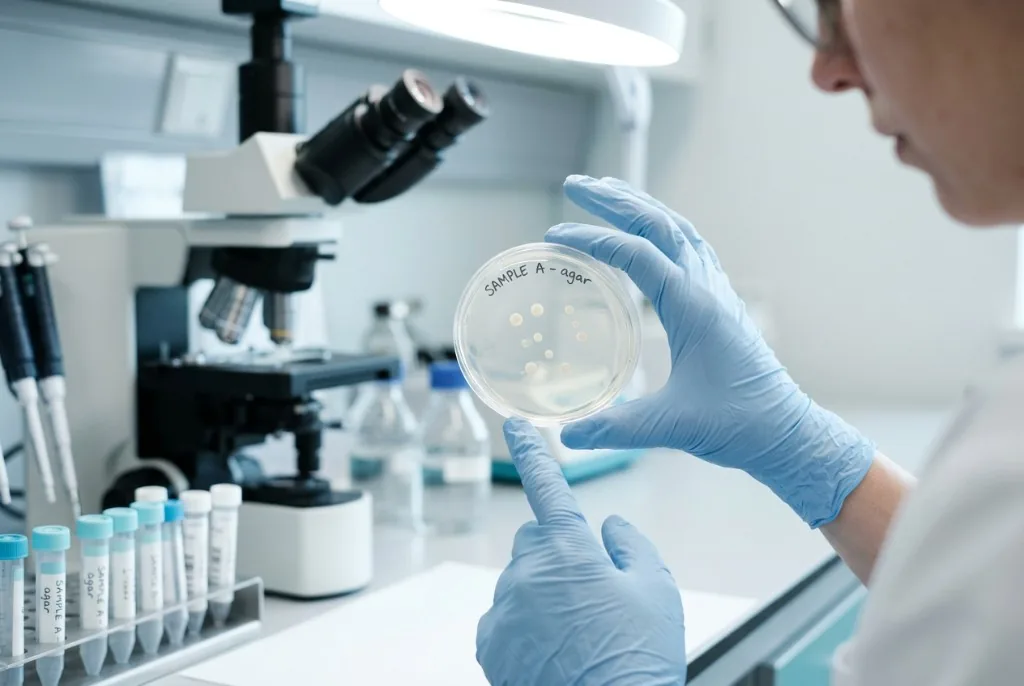
The lab places your sample in conditions where bacteria and fungi can grow, then identifies whatever appears. Instead of a vague "there might be an infection", you get a name, and a name is what a doctor needs to choose the right treatment, or to decide that no treatment is needed at all.
When the report includes which antibiotics work against the bacteria found, your doctor can go straight to the one that will do the job, rather than trying one and waiting to see.
Who it's for
A sperm culture makes sense when there is a specific question to answer. That might be pain during or after ejaculation, discomfort in the pelvis, testicles or lower back that doesn't settle, or a semen analysis showing raised white blood cells, which can point to inflammation in the reproductive tract.
It also answers a different question from a semen analysis. A semen analysis counts your sperm and looks at how they move and how they're shaped, while a culture looks for infection. During a fertility work-up, the two often go together, because when an infection is affecting sperm quality, it's something that can be treated.
You don't need a sperm culture just because you're trying to conceive. Its value is in investigating a concern you or your doctor already have.
How to collect your sample
The quality of the result depends on the quality of the sample, so these steps matter:
- Antibiotics and probiotics: leave at least 15 days between your last dose and the test, because they can hide bacteria and give you a false negative. If you're on a prescribed antibiotic, never stop it to take the test, and ask the doctor who prescribed it about timing.
- Before you start: pee first, so the sample isn't mixed with bacteria from your urethra.
- How to collect: by masturbation only, straight into the sterile container, without lubricants, creams or condoms, as all of these can affect what grows in the lab.
- The whole sample: collect all of the ejaculate in the container. If some of it is lost, tell the lab when you hand it in.
Reading your results
A positive result names what was found, and your doctor reads it alongside your symptoms and any other tests, because some bacteria can come from the skin during collection. A negative result means nothing relevant grew in this test. It's genuinely good news, though it doesn't explain every kind of discomfort, so if your symptoms continue, keep looking for the cause with your doctor.
Get your sperm culture with Diagnostic Station
Buy the test online, collect your sample at home, and bring it to a partner lab during collection hours, in Barcelona, Madrid, Valencia or Málaga. Your results come back ready to share with your doctor, with a name for what was found and, where relevant, the antibiotics that work against it.
Frequently asked questions
Does a sperm culture test for STIs?
Not for the common ones. A culture finds bacteria and fungi that grow in the lab, and some infections, like chlamydia and gonorrhoea, need their own specific test. If those are what you want to rule out, an STI test is the right choice, and you can do both.
Is it useful if I have no symptoms?
Sometimes. If a semen analysis showed raised white blood cells, a culture can be worth doing even when you feel completely fine. Without symptoms or a result that points to infection, it's usually not needed.
Can it diagnose prostatitis?
Not on its own. Prostate symptoms need a medical assessment, and a sperm culture is one piece of that investigation, not the whole answer.
If the result is positive, does my partner need treatment too?
It depends on what was found. A positive culture doesn't automatically mean a sexually transmitted infection, and if one is identified, your doctor will tell you whether your partner should be tested or treated.
Can I take the test while on antibiotics?
It's better not to, because antibiotics can stop bacteria growing in the lab and hide an infection. Wait at least 15 days after your last dose, and never stop a prescribed course without talking to the doctor who prescribed it.
What if the pain is severe?
Don't wait for a test result. If you can't pee, or you have a fever together with strong pain in the pelvis or genitals, get urgent medical care today.
This content is for information only. Your results should be interpreted by a healthcare professional, who can also advise you on any diagnosis or treatment.
More tests
Blood Tests for Hair Loss
Losing more hair than usual? Rule out what a specialist checks first.
€160.00General health panel
One of our best check-ups: a proper look at how your main organs are doing
Most sold€135.00General health panel
One of our best check-ups: a proper look at how your main organs are doing
Most soldInsulin resistance check
Craving sugar every afternoon? See how your body is really handling it.
€65.00Kidney panel + urinalysis
See how your kidneys are really doing, with blood and urine checked in one test.
€70.00Kidney panel + urinalysis
See how your kidneys are really doing, with blood and urine checked in one test.
Men’s hormones PLUS
Energy, libido or performance changed? Your hormones may explain more than you think.
€160.00Men’s hormones PLUS
Energy, libido or performance changed? Your hormones may explain more than you think.
Training check
Is your body ready for more training? See how it handles the load you give it.
Most sold€160.00Training check
Is your body ready for more training? See how it handles the load you give it.
Most soldUrine culture and sensitivity
Burning when you pee? Find the bacteria and the antibiotic that works on it.
€45.00Urine culture and sensitivity
Burning when you pee? Find the bacteria and the antibiotic that works on it.
Vitamins and minerals check
Do you have enough vitamins? Check before you buy more supplements.
€135.00