 + UrineLevel 2 of 3Results in 2 days
Kidney panel + urinalysis
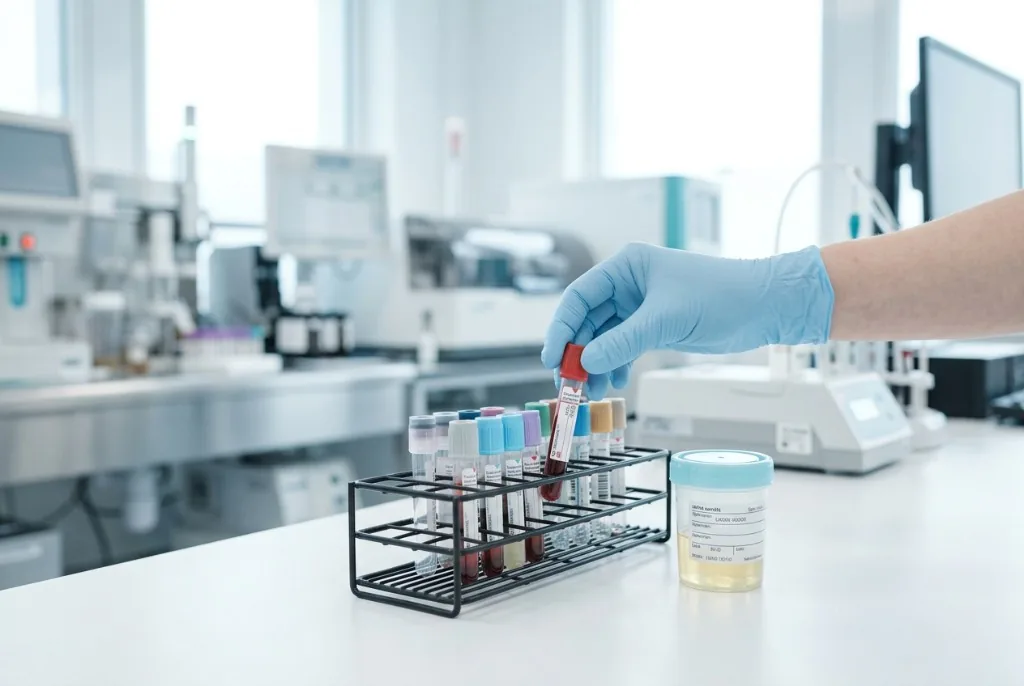
Sample: Blood and urine
Your kidneys spend every day filtering your blood without asking for anything in return, so this panel is a simple way to see how they are doing. It looks at them in two ways, through the waste they remove from your blood and through what ends up in your urine, and it checks the minerals they keep in balance for your nerves, muscles and body fluids. A complete blood count is also included, because your kidneys help your body make red blood cells. You get a clear picture of how your kidneys are working, ready to share with your doctor.
€70.00
- 1. Come in fasting (12 hours). You can drink water. Keep taking your usual medication unless your doctor says otherwise. Bring your confirmation and an ID.
- 2. Bring a urine sample or pee at the lab.
- 3. Bring the first urine of the morning.
These are general recommendations. Check the preparation for your tests with your doctor.
- Sample: Blood and urine
- Results in2 days
- Fasting12h required
- Complete blood count (CBC): Complete blood count: red cells, white cells, platelets.
- Urea: A waste product your liver makes from protein. Your kidneys remove it from the blood. Paired with creatinine, it gives a fuller picture of kidney filtration and protein metabolism.
- Creatinine: A waste product your muscles make every day as they use energy, which your kidneys filter out of your blood and send into your urine. Because its level rises when the kidneys filter less, it is the starting point for calculating eGFR, and it can also go up with high muscle mass, a lot of red meat, intense exercise or not drinking enough water.
- eGFR (Glomerular Filtration): A calculated score of how well the kidneys filter waste per minute. More precise than creatinine alone.
- Sodium: The main salt in your body fluids. It helps control your water balance, and your kidneys keep it at a steady level.
- Potassium: A mineral your muscles and heart need to work properly. Your kidneys control how much of it stays in your blood.
- Chloride: Works with sodium to keep your body fluids and acid balance stable. It is usually read together with sodium and potassium.
- Urinalysis: A general check of your urine, including protein, blood and glucose. It shows what passes through your kidney filters that normally stays in your blood.

Kidney panel
Your kidneys work the night shift for life, filter your blood without a break, and never once send you an invoice. This panel checks how well they filter waste, measures key salts in your blood and looks for abnormalities in your urine. Combining blood and urine tests helps identify signs of reduced kidney function or salt imbalances, including changes you might not have noticed yet.
What's included
The panel looks at your kidneys from three angles: how well they filter, how well they keep your minerals in balance, and what's turning up in your blood and urine.
Kidney function (blood)
- Creatinine: a waste product from your muscles. Your kidneys clear it, so its level says a lot about how well they filter.
- eGFR (CKD-EPI): an estimate of how much your kidneys filter every minute, calculated from your creatinine, age and sex.
- Urea: made by your liver when it breaks down protein, then cleared by your kidneys. On reports from other countries the same substance appears as BUN (blood urea nitrogen), so you can compare an older BUN result with this one.
Electrolytes (blood)
- Sodium, potassium and chloride: the minerals that keep your fluids, nerves and muscles in balance. Your kidneys are the ones keeping them steady.
Complete blood count (blood)
- Red blood cells, haemoglobin and haematocrit: your kidneys make the hormone that tells your body to produce red blood cells, so anaemia can be one of the first quiet hints that they're struggling.
- White blood cells and platelets: a general check on infection, inflammation and clotting.
Basic urinalysis (urine)
- Protein, blood, glucose, white blood cells, nitrites, ketones, pH and density: what's slipping through your filters that shouldn't be, plus signs of infection.
Sample: a blood draw from your arm and a urine sample. Results: in 2 days.
Why blood and urine together
Your blood shows how well your kidneys filter. Your urine shows what's getting through that shouldn't. Protein or blood in your urine can appear before your creatinine moves at all, so one without the other is half the story. The blood count adds a third angle, because your kidneys and your red blood cells are more connected than most people think.
Who it's for
This panel makes sense if you have diabetes, high blood pressure, an autoimmune condition or a family history of kidney disease. It's also useful if you're already being followed for a kidney condition, such as glomerulonephritis or polycystic kidney disease, or if you simply want a baseline to compare against in the future.
It's worth checking if you notice swelling around your ankles or eyes, tiredness that won't shift, changes in how much or how often you pee, foamy or unusually dark urine, itchy skin or nausea. All of these have plenty of possible causes, and this panel helps you and your doctor see whether your kidneys are part of the story.
Chest pain, sudden breathlessness or hardly peeing at all are a different matter: those need urgent care today, not a lab appointment.
How to prepare
Fast for 12 hours before your visit. Water is fine, and your coffee can wait until after the blood draw.
- Urine sample: use your first pee of the morning. Start peeing into the toilet, then fill the sterile container mid-flow. You can get a container at any pharmacy. Bring it to the lab within a couple of hours.
- Water: drink as usual. Downing litres the night before dilutes your urine and blurs the results.
- Exercise: skip the intense workout the day before. Hard training can raise your creatinine and put protein in your urine for a day or two.
- Medication: keep taking it, and tell the lab what you take. Some medicines, like cimetidine or trimethoprim, can raise creatinine without harming your kidneys.
- Creatine supplements: mention them too, as they raise blood creatinine.
- Your period: if you're menstruating, wait a few days after it ends, or blood can show up in your urine and confuse the result.
Reading your results without handing all the power to the asterisk
An asterisk next to a number only means it's outside the lab's reference range. It doesn't tell you why, or whether it matters. A high creatinine can come from your kidneys, but also from a big gym session, not enough water or a lot of muscle. A normal result doesn't rule everything out either.
Your doctor reads the whole picture: your results together, how they change over time, your medication and your history. Take three questions with you:
- Which of my results matter in my case?
- Have they changed since my last tests?
- Would a repeat test or an extra test be useful?
Getting your kidney panel with Diagnostic Station
You buy the panel online without a GP appointment or a referral, then go to a partner lab during the collection hours shown, in Barcelona, Madrid, Valencia or Málaga. Your results arrive ready to take to any doctor.
Frequently asked questions
What does a kidney function test include?
A kidney function test is a group of blood and urine checks that show how the kidneys are clearing waste and handling salts. This panel includes a complete blood count (CBC), creatinine, estimated glomerular filtration rate (eGFR), urea, sodium, potassium, chloride, and a urinalysis. Those results describe the sample, and they are not a diagnosis on their own, so bring the report to your doctor when you want help reading it.
Do I need to fast for a kidney panel?
Yes. Fast for 12 hours before the draw. Water is fine, and bring the first urine of the morning.
Do I need a prescription?
No. You can buy the test directly, and take the report to any doctor.
How is the blood taken?
A quick draw from a vein in your arm with a small needle. It takes less than five minutes and feels like a short pinch. You might get a small bruise that usually fades within a day or two.
How do I collect the urine sample?
Use your first pee of the morning, catch it mid-flow in a sterile container from a pharmacy, close it tightly and bring it to the lab within a couple of hours.
Can I do the test during my period?
The blood test, yes. For the urine sample, it's better to wait a few days after your period ends, because menstrual blood can show up in the result.
Can I go to the gym the day before?
A light session is fine. Skip intense or long training, as it can temporarily raise creatinine and protein in your urine.
Should I stop my medication before the test?
No. Keep taking it and tell the lab what you take. Only your doctor should change your treatment.
I take creatine. Is that a problem?
Not a problem, just something to mention. Creatine supplements can raise your blood creatinine without your kidneys being affected.
What is creatinine?
Creatinine is a normal waste product made when muscle tissue breaks down, and the kidneys filter it from the blood into urine. The blood test measures how much creatinine is in the sample. Age, sex, and muscle size also move the number, so one result does not diagnose kidney disease, and your doctor reads it beside the rest of the report.
What is BUN?
BUN means blood urea nitrogen, another way of reporting the same substance as urea, common on reports from other countries. This panel reports urea, so you can compare an older BUN result with it. A higher value can come from dehydration, a protein-heavy diet or hard training rather than your kidneys, so one number alone is never a diagnosis, and your doctor reads it with the rest of the report.
Why is a blood count included in a kidney panel?
Your kidneys produce the hormone that triggers red blood cell production. When they struggle, anaemia can appear, so the blood count adds an important piece to the picture.
What doesn't this panel include?
It doesn't include the urine albumin-to-creatinine ratio (ACR), a more sensitive test for small amounts of protein in your urine. It's often recommended for people with diabetes or high blood pressure, so ask us if you want to add it.
If my results are normal, am I in the clear?
Normal results are great news, and they show how your kidneys are doing today. They don't rule out every possible issue, so if you have symptoms or risk factors, keep your doctor in the loop.
How often should I repeat this panel?
Your doctor will tell you, based on your health and your results. People with diabetes or high blood pressure often check their kidneys once a year.
When will I get my results?
Within 2 days.
This content is for information only. Your results should be interpreted by a healthcare professional, who can also advise you on any diagnosis or treatment.
More tests
Blood Tests for Hair Loss
Losing more hair than usual? Rule out what a specialist checks first.
€160.00Bone & mineral metabolism panel
How are your bones? See the full system that keeps calcium where your body needs it.
€105.00Bone & mineral metabolism panel
How are your bones? See the full system that keeps calcium where your body needs it.
Cholesterol and triglycerides
How is your cholesterol? Check the good, the bad and your triglycerides.
€45.00Cholesterol and triglycerides
How is your cholesterol? Check the good, the bad and your triglycerides.
Creatine and kidney check
Want to keep taking creatine? Check your kidneys with a test that allows for it.
€95.00Creatine and kidney check
Want to keep taking creatine? Check your kidneys with a test that allows for it.
General health panel
One of our best check-ups: a proper look at how your main organs are doing
Most sold€135.00General health panel
One of our best check-ups: a proper look at how your main organs are doing
Most soldHIV PCR: detection at 3 to 7 days
Allows early detection of the infection. Window period 3-7 days
€140.00Insulin resistance check
Craving sugar every afternoon? See how your body is really handling it.
€65.00Liver check
Is your liver working well? It is your body’s main detox organ: check how it works.
Most sold€54.00Liver check
Is your liver working well? It is your body’s main detox organ: check how it works.
Most soldMen’s hormones PLUS
Energy, libido or performance changed? Your hormones may explain more than you think.
€160.00Men’s hormones PLUS
Energy, libido or performance changed? Your hormones may explain more than you think.
Microplastics and endocrine disruptors
Worried about plastics in your body? Measure your bisphenols, phthalates, parabens.
€250.00Microplastics and endocrine disruptors
Worried about plastics in your body? Measure your bisphenols, phthalates, parabens.
Thyroid panel Plus + reverse T3
Looking for a thyroid panel that includes reverse T3? This is ours.
Most sold€145.00Thyroid panel Plus + reverse T3
Looking for a thyroid panel that includes reverse T3? This is ours.
Most soldTraining check
Is your body ready for more training? See how it handles the load you give it.
Most sold€160.00Training check
Is your body ready for more training? See how it handles the load you give it.
Most soldUltra-sensitive C-reactive protein test
Measures the low, ongoing inflammation that standard CRP can’t see.
€45.00Ultra-sensitive C-reactive protein test
Measures the low, ongoing inflammation that standard CRP can’t see.
Urine culture and sensitivity
Burning when you pee? Find the bacteria and the antibiotic that works on it.
€45.00Urine culture and sensitivity
Burning when you pee? Find the bacteria and the antibiotic that works on it.
Vitamin B12 pack: total and active
Total and active B12 in one pack: how much you have and how much you can use
Most sold€95.00Vitamin B12 pack: total and active
Total and active B12 in one pack: how much you have and how much you can use
Most sold