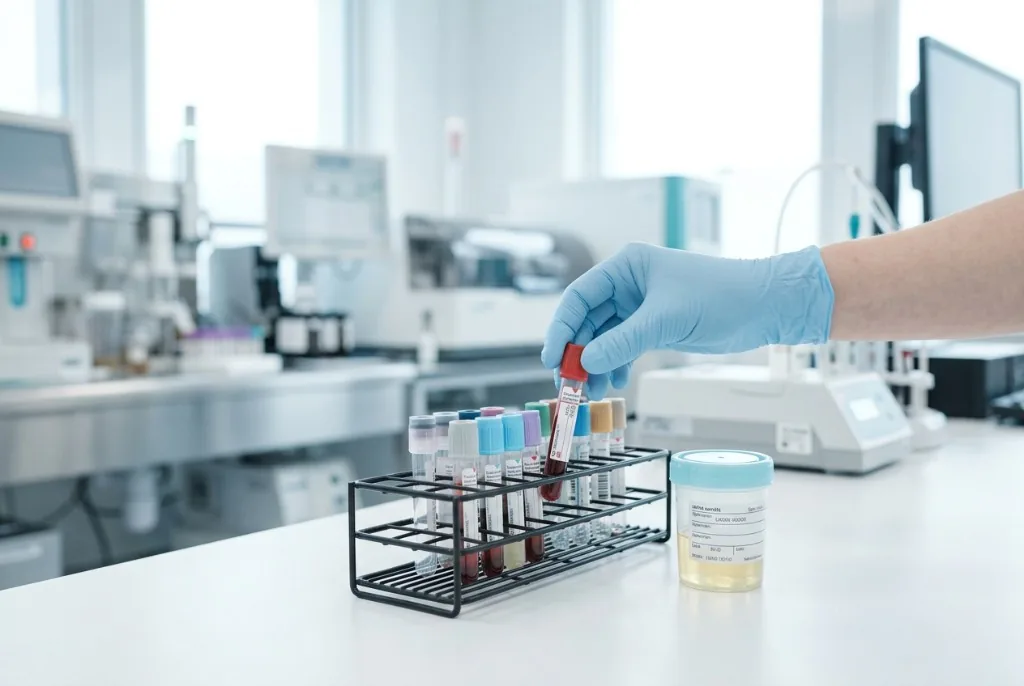
Yes. Buy your blood or STI test on the website without a GP referral, then come in for your sample. If you get stuck on any step, email us and we will help you through it.
Do I pay online?
Yes. You pay on the website before you go. That way, when you arrive, you only give your sample and you are done.
Is my payment secure?
Yes. You pay on the secure page of our payment provider, MONEI, a Spanish payment platform certified to the same security standard banks use (PCI DSS). Your card number goes to them, never to us. We only receive the confirmation that your payment went through.
Where do I give my sample?
You give your sample in Eixample or Gràcia. The test page and your order email explain how to get there.
How do I know the laboratory is reliable?
Your sample is analysed by an authorised clinical laboratory, licensed by the Generalitat de Catalunya (authorisations E08026400 and E08750211) and certified under ISO 9001 for clinical analysis, with its quality audited by Bureau Veritas. Its results run under permanent internal and external quality controls, and every result comes with the laboratory's reference range.
Do I need an appointment?
Not with us. Once you have bought your test online, come during sample-collection hours. If you are unsure which window works for you, write to us and we will sort it out together.
How long do results take?
Most results arrive within 24–72 hours. The exact timing is on the page for your test. If they are late and you are worried, contact us and we will sort it out.
Do I need to fast?
Only if your test asks for it. Preparation instructions are on the test page. If you are not sure, ask before you go and we will clarify.
Can I request a test that is not in the catalogue?
Yes. If your doctor gave you a list of tests or markers, send it to us through the custom quote page. We send you a quote for that combination.
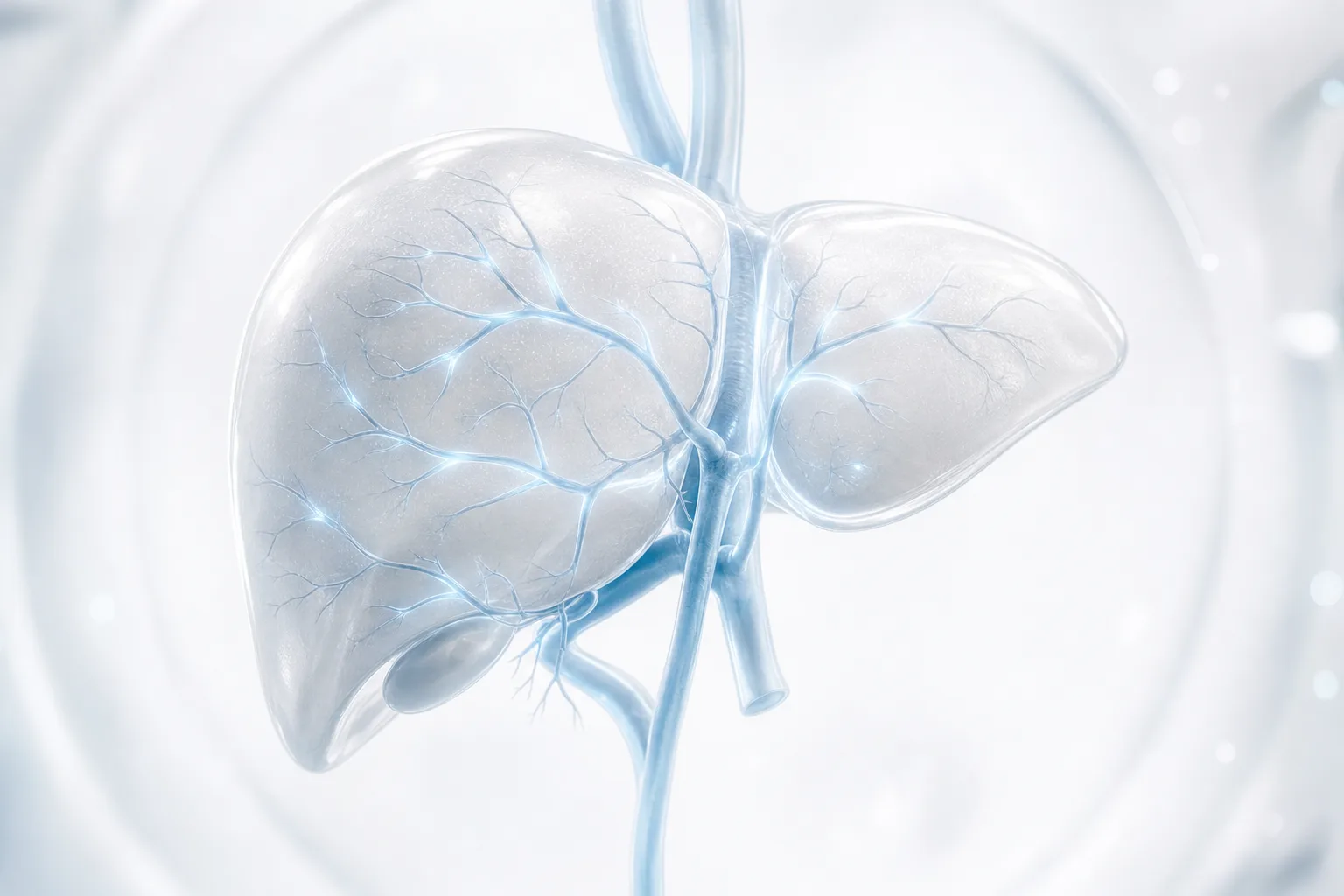
One of our best check-ups: a proper look at how your main organs are doing
Most sold
What’s inside
ESR: Inflammation rate - how fast red cells settle.
Complete blood count (CBC): Complete blood count: red cells, white cells, platelets.
Total Protein: All the proteins in your blood, including albumin and the antibodies that defend your body. It gives a general picture of your nutrition and your liver.
Albumin: The main protein in your blood, made by your liver. It keeps fluid inside your blood vessels and carries hormones, nutrients and medicines.
GGT: A liver enzyme that reacts to alcohol and some medicines. It helps explain your other liver results.
Alkaline Phosphatase (ALP): An enzyme found mainly in your liver and your bones. It's read together with your other liver markers.
Creatinine: A waste product your muscles make every day as they use energy, which your kidneys filter out of your blood and send into your urine. Because its level rises when the kidneys filter less, it is the starting point for calculating eGFR, and it can also go up with high muscle mass, a lot of red meat, intense exercise or not drinking enough water.
Total Cholesterol: All the cholesterol in your blood. Your body needs it to build cells and hormones, and it's read together with LDL, HDL and triglycerides.
HDL Cholesterol: The cholesterol carried back to your liver to be cleared. Higher levels are generally a good sign.
LDL Cholesterol: The cholesterol carried from your liver to the rest of your body. When it's high, it can build up in the walls of your arteries.
VLDL Cholesterol: Carries triglycerides through the blood. Elevated VLDL is a cardiovascular risk signal on top of LDL.
Triglycerides: The most common type of fat in your blood, used by your body for energy. They rise after a meal, so they're measured after fasting.
See all 22 markers
Atherogenic risk (TG/HDL ratio and non-HDL cholesterol): Two numbers worked out from your cholesterol results. The TG/HDL ratio hints at small, dense LDL particles, and non-HDL cholesterol adds up every particle that can clog an artery. Both help your doctor judge heart risk beyond the single LDL figure.
AST (GOT): An enzyme found in your liver and your muscles. It can rise when either is under strain, including after hard exercise.
Total Bilirubin: A yellow substance made when old red blood cells are broken down, then cleared by your liver. Some people naturally have slightly higher levels.
ALT (GPT): An enzyme found mainly in your liver. It's one of the most direct markers of how your liver is doing.
Glucose: The amount of sugar in your blood. It shows how well your body manages sugar, and it's usually measured after fasting so the result is easy to compare.
Uric Acid: Uric acid - gout risk and metabolic health.
Serum Iron (Sideremia): How much iron is circulating right now. Not the same as ferritin - this is the immediate snapshot, not the stored reserve.
Urea: A waste product your liver makes from protein. Your kidneys remove it from the blood. Paired with creatinine, it gives a fuller picture of kidney filtration and protein metabolism.
Urinalysis: A general check of your urine, including protein, blood and glucose. It shows what passes through your kidney filters that normally stays in your blood.
eGFR (Glomerular Filtration): A calculated score of how well the kidneys filter waste per minute. More precise than creatinine alone.
HIV 1+2 Ag/Ac Combo [4. Generación]: This test looks for HIV in two ways at once: the p24 protein, a part of the virus itself that appears very soon after infection, and antibodies, the defences your body makes against HIV-1 and HIV-2. It's also known as the fourth-generation HIV test, and infection is detectable after 10-18 days. The laboratory recommends confirming negative results at 30 days after a risk exposure.
Hepatitis B surface antigen (HBsAg): A protein from the outer surface of the hepatitis B virus. If it's found in your blood, it shows the virus is present right now.
Hepatitis C antibodies (anti-HCV): Antibodies your body makes against the hepatitis C virus. They show whether you've ever been in contact with the virus, and a positive result is confirmed with a second test that looks for the virus itself.
Syphilis RPR (VDRL): A screening test for syphilis that measures antibodies your body makes in response to the infection. A positive result is confirmed with a second, more specific test, and the level is also used to follow treatment.
Syphilis antibodies (Treponema IgG+IgM): Looks for the antibodies your body makes against Treponema pallidum, the bacteria behind syphilis. They appear from about three weeks after exposure and usually stay positive after treatment, so the lab reads them together with the RPR.
Chlamydia (Chlamydia trachomatis): A bacterial infection passed on through vaginal, anal or oral sex. It often causes no symptoms, especially in women, and a short course of antibiotics treats it.
Gonorrhoea (Neisseria gonorrhoeae): A bacterial infection passed on through vaginal, anal or oral sex. Men often notice burning or discharge, while in women it frequently goes unnoticed, and antibiotics treat it.
Total and active B12 in one pack: how much you have and how much you can use
Most sold
What’s inside
Active vitamin B12 (holotranscobalamin): The part of your B12 your cells can actually use. It can be low even when total B12 looks normal.
Active B12 is the part of your vitamin B12 that your cells can actually take in and use, while the rest is held in storage. Because of that, total B12 can look normal while active B12 is low. Low levels can bring the same signs as low B12: tiredness, pins and needles in the hands or feet, a sore tongue, low mood or trouble concentrating.
Vitamin B12 (cobalamin): Vitamin B12 is a vitamin your body can't make, so it comes from animal foods, fortified foods or supplements. You need it to make red blood cells, keep your nerves healthy and copy DNA. When levels are low, it can show up as tiredness, pins and needles in the hands or feet, a sore tongue, low mood or trouble concentrating. This marker measures the total B12 in your blood.
One proper check for the major areas of men’s health, all in one blood test.
What’s inside
Complete blood count (CBC): Complete blood count: red cells, white cells, platelets.
Glucose: The amount of sugar in your blood. It shows how well your body manages sugar, and it's usually measured after fasting so the result is easy to compare.
HbA1c (glycated haemoglobin): Your average blood sugar over the last two to three months. One day of eating doesn't change it, so it shows the bigger picture.
Total Protein: All the proteins in your blood, including albumin and the antibodies that defend your body. It gives a general picture of your nutrition and your liver.
AST (GOT): An enzyme found in your liver and your muscles. It can rise when either is under strain, including after hard exercise.
ALT (GPT): An enzyme found mainly in your liver. It's one of the most direct markers of how your liver is doing.
GGT: A liver enzyme that reacts to alcohol and some medicines. It helps explain your other liver results.
Alkaline Phosphatase (ALP): An enzyme found mainly in your liver and your bones. It's read together with your other liver markers.
Total Bilirubin: A yellow substance made when old red blood cells are broken down, then cleared by your liver. Some people naturally have slightly higher levels.
Albumin: The main protein in your blood, made by your liver. It keeps fluid inside your blood vessels and carries hormones, nutrients and medicines.
Urea: A waste product your liver makes from protein. Your kidneys remove it from the blood. Paired with creatinine, it gives a fuller picture of kidney filtration and protein metabolism.
Trichomonas (Trichomonas vaginalis): A tiny parasite passed on through sex. Most people have no symptoms, women are more likely to notice discharge or itching, and a short course of medication treats it.
Mycoplasma hominis: A bacterium that lives in the genital area of many healthy people without causing problems. A positive result is read together with your symptoms, and often needs no treatment.
Mycoplasma genitalium: A bacterium passed on through sex that often causes no symptoms. It needs specific antibiotics, so knowing it's there helps your doctor choose the right treatment.
Ureaplasma parvum: One of the most common bacteria in the genital area, and usually harmless. A positive result without symptoms rarely needs treatment.
Ureaplasma urealyticum: A bacterium commonly found in the genital area of healthy people. It sometimes causes irritation when you pee, so a positive result is read together with your symptoms.
See all 19 markers
Treponema pallidum: This is the bacteria behind syphilis. It usually starts with a single firm, round sore that doesn't hurt. The sore goes away on its own, but the infection continues if it isn't treated.
Haemophilus ducreyi: Causes chancroid: one or more very painful genital ulcers with irregular edges, often with swollen lymph nodes in the groin.
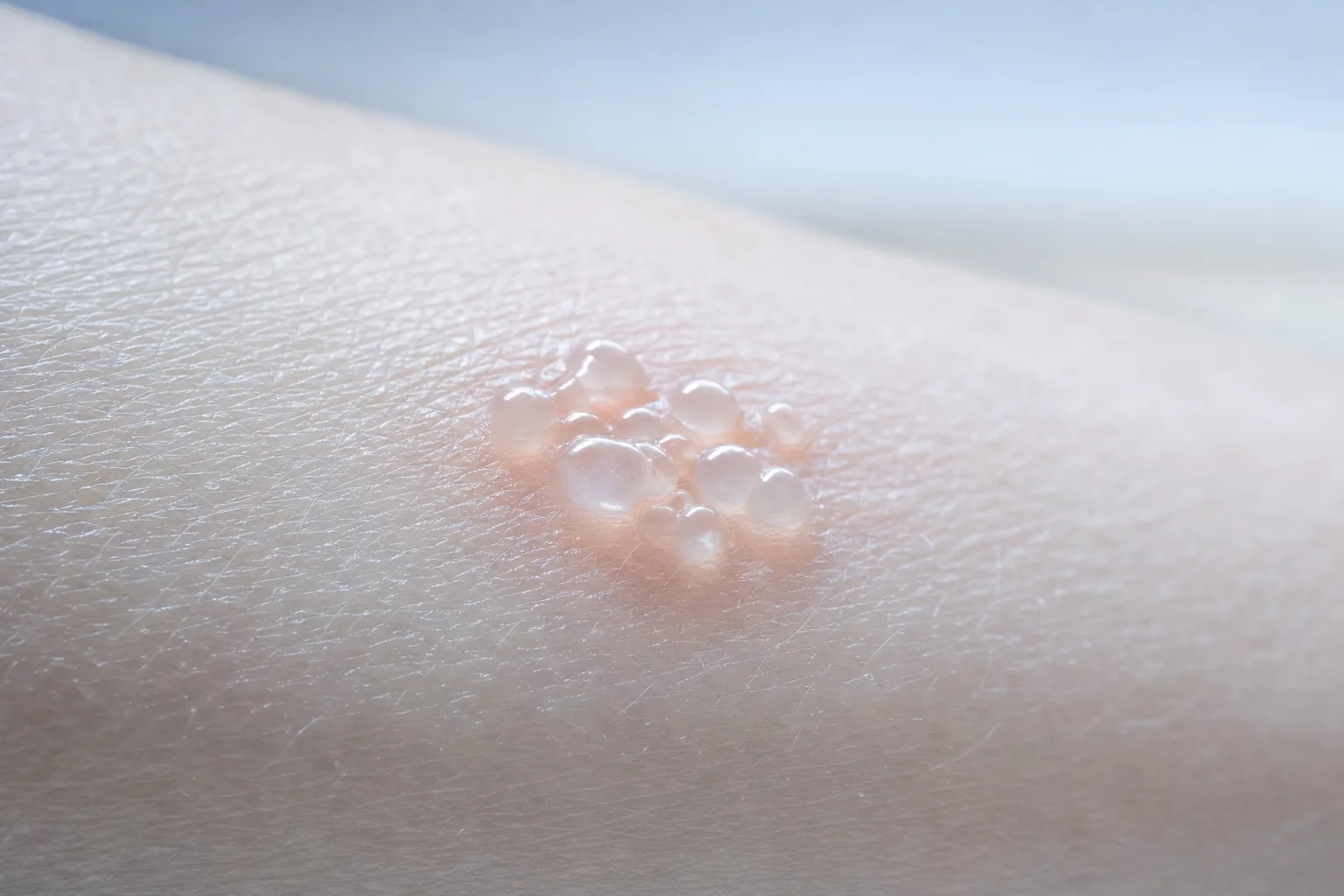
Herpes Virus 1 (HSV1): Causes genital or oral herpes: small clusters of blisters with a lot of pain, burning or itching. When they break, they leave shallow ulcers and scabs, sometimes with fever and feeling unwell.
Herpes Virus 2 (HSV2): Causes genital or oral herpes: small clusters of blisters with a lot of pain, burning or itching. When they break, they leave shallow ulcers and scabs, sometimes with fever and feeling unwell.
Varicela Zoster Virus (VZV): Causes shingles. It's less common in the genital area, but it can cause painful blisters along a line on the skin of the lower back or groin.
Clamidia trachomatis LGV (Linfogranuloma venereo): Causes lymphogranuloma venereum: a small, short-lived ulcer that barely hurts, and weeks later, a strong and painful swelling of the lymph nodes in the groin.
Citomegalovirus (CMV): It usually causes no symptoms in healthy people, or something like mononucleosis, with fever and tiredness. With a weak immune system, it can cause ulcers that don't go away.
Guidance only. A test is not a diagnosis. Detection times are approximate and vary from person to person: if the result is negative and the exposure is recent, it may need repeating. Check your results with a healthcare professional.
Creatinine: A waste product your muscles make every day as they use energy, which your kidneys filter out of your blood and send into your urine. Because its level rises when the kidneys filter less, it is the starting point for calculating eGFR, and it can also go up with high muscle mass, a lot of red meat, intense exercise or not drinking enough water.
See all 29 markers
eGFR (Glomerular Filtration): A calculated score of how well the kidneys filter waste per minute. More precise than creatinine alone.
Sodium: The main salt in your body fluids. It helps control your water balance, and your kidneys keep it at a steady level.
Potassium: A mineral your muscles and heart need to work properly. Your kidneys control how much of it stays in your blood.
Chloride: Works with sodium to keep your body fluids and acid balance stable. It is usually read together with sodium and potassium.
Ferritin: Shows how much iron your body has stored. It can also rise when your body is dealing with inflammation.
Serum Iron (Sideremia): How much iron is circulating right now. Not the same as ferritin - this is the immediate snapshot, not the stored reserve.
Total iron-binding capacity (TIBC): How much iron your blood could carry if every iron-carrying protein were full. It rises when your iron stores run low, so it shows whether your body is looking for more iron.
Transferrin: The main protein that carries iron through your blood, made by your liver. Your body makes more of it when iron runs low, so it shows how your body is managing its iron supply.
Transferrin saturation index: How much of the protein that carries iron in your blood is actually carrying it. The lab calculates it from your serum iron and TIBC, and it shows whether iron is getting where it's needed.
Magnesium: A mineral your muscles, nerves and heart need to work properly. It also helps your body turn food into energy.
Total PSA: A protein made by your prostate, used to check how your prostate is doing. This result measures all the PSA in your blood, and it can rise for many everyday reasons, like age, cycling or ejaculation in the 48 hours before the test.
Total Cholesterol: All the cholesterol in your blood. Your body needs it to build cells and hormones, and it's read together with LDL, HDL and triglycerides.
HDL Cholesterol: The cholesterol carried back to your liver to be cleared. Higher levels are generally a good sign.
LDL Cholesterol: The cholesterol carried from your liver to the rest of your body. When it's high, it can build up in the walls of your arteries.
VLDL Cholesterol: Carries triglycerides through the blood. Elevated VLDL is a cardiovascular risk signal on top of LDL.
Triglycerides: The most common type of fat in your blood, used by your body for energy. They rise after a meal, so they're measured after fasting.
Atherogenic risk (TG/HDL ratio and non-HDL cholesterol): Two numbers worked out from your cholesterol results. The TG/HDL ratio hints at small, dense LDL particles, and non-HDL cholesterol adds up every particle that can clog an artery. Both help your doctor judge heart risk beyond the single LDL figure.